Showing posts with label Organisms Catalogue. Show all posts

Saturday, 16 July 2022

Melanterius Weevils

Here in the Antipodes, we have a long history of environmental upheaval from exotic taxa unwisely released. As a result, one can't help but feel an odd twinge of perverse patriotism when hearing of the inverse, some native of the Antipodes causing grief elsewhere. In South Africa, Australian acacias have become something of an issue, inciting a search for potential control agents. Among the candidates selected are weevils of the genus Melanterius.

Melanterius servulus, copyright Sally Adam.


Melanterius is a diverse genus of small black or brown weevils (ranging from about three to seven millimetres in length) that feed as both adults and larvae on the developing seeds of acacias. About eighty species have been recognised in the genus to date and possibly many more remain to be described. In general, Melanterius weevils are heavily punctate, usually without prominent hairs but with a covering of scales. The rostrum is reasonably long, reaching more or less back to the mesosternum at rest but not sitting in a distinct ventral groove, and may be variably curved (going by figures in Zimmerman 1992).

Melanterius semiporcatus, copyright Victor W. Fazio III.


As with other weevils, the prominent rostrum is used by females to chew into an appropriate spot on the host plant, in this case chewing holes into the developing acacia seed pods, into which eggs are laid. Melanterius species go through one generation per year. Larvae burrow into and feed on the developing seeds before emerging and dropping to the ground to pupate in the soil. Mature adults emerge well before the host acacias begin to set seeds, usually having to wait about six months (Auld 1989). They usually spend the intervening period largely inactive, sheltering in concealed places close to the host plant and occasionally emerging to briefly feed on developing buds.

Under peak conditions, Melanterius infestations may cause a complete failure of seed production. No wonder, then, that they have been considered a worthwhile instrument of biological control.

REFERENCES

Auld, T. D. 1989. Larval survival in the soil and adult emergence in Melanterius Erichson and Plaesiorhinus Blackburn (Coleoptera: Curculionidae) following seed feeding on Acacia and Bossiaea (Fabaceae). Journal of the Australian Entomological Society 28: 235–238.

Zimmerman, E. C. 1992. Australian Weevils (Coleoptera: Curculionoidea) vol. 6. Colour plates 305–632. CSIRO Australia.

source http://coo.fieldofscience.com/2022/07/melanterius-weevils.html

Monday, 11 July 2022

Kirkby's Small Ostracods (or Small Kirkby's Ostracods)

I do not envy those who find themselves working with ostracods. These minute crustaceans, typically less than a millimetre in length, seem altogether too fiddly to handle. Nevertheless, the long history of ostracods, together with their diversity and the high fossilisation potential of their calcified carapace valves, have made them a common focus for studying biostratigraphy and historical environments. The classification of modern ostracods is commonly informed by features of the legs and other appendages but such characters are not commonly preserved in fossil representatives. As a result, there are many groups of ostracods known from the Palaeozoic whose relationships remain uncertain.

Left valve of Kirkbyella delicata, from Hoare & Merrill (2004).


One such group is classified by Liebau (2005) as the superfamily Kirkbyelloidea. Members of this group are small ostracods with reticulate valves. The dorsal and ventral margins of the valves tend to be more or less straight. They are commonly impressed with a single dorsal sulcus, extending downwards from the dorsal margin about halfway along the valve's length. Below this sulcus is a protruding horizontal lobe ending in members of the family Kirkbyellidae in a small spine. Evidence of sexual dimorphism, a not-uncommon feature of Palaeozoic ostracods, is not known from kirkbyelloids.

Definite kirkbyelloids are known from the Devonian to the Permian. If the earlier family Ordovizonidae is included, their record extends all the way back to the Ordovician. As noted above, it is unclear where kirkbyelloids sit in the ostracod family tree. Becker (1994) suggested a relationship via Ordovizona to the Ordovician Monotiopleuridae which resemble kirkbyelloids in the outline of the carapace valves and features of the adductor muscle scars. Though long-lived, kirkbyelloids don't seem to have ever been massively diverse, and they can probably be counted among the many lineages of organisms that never made it past the end of the Palaeozoic.

REFERENCES

Becker, G. 1994. A remarkable Ordovician ostracod fauna from Orphan Knoll, Labrador Sea. Scripta Geologica 107: 1–25.

Hoare, R. D., & G. K. Merrill. 2004. A Pennsylvanian (Morrowan) ostracode fauna from Texas. Journal of Paleontology 78 (1): 185–204.

Liebau, A. 2005. A revised classification of the higher taxa of the Ostracoda (Crustacea). Hydrobiologia 538: 115–137.

source http://coo.fieldofscience.com/2022/07/kirkbys-small-ostracods-or-small.html

Thursday, 7 July 2022

Conformed Flycatchers

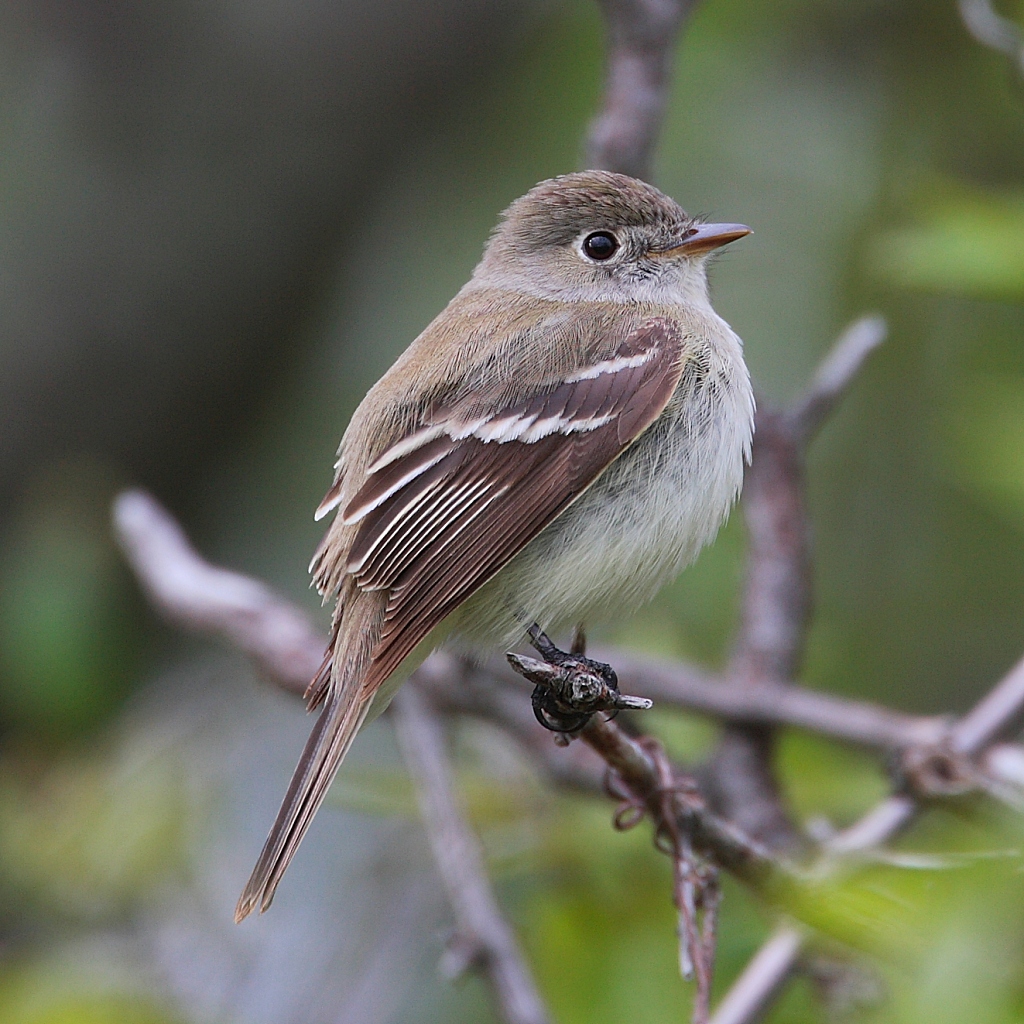
A quote I have often had cause to refer to—I believe it originally came from Toby White of Palaeos.com—is that "organisms are under no obligation to speciate with regard to the convenience of taxonomists". For birdwatchers in North America, perhaps no group more embodies this principle than the flycatchers of the genus Empidonax. These small members of the hyperdiverse New World family Tyrannidae comprise fifteen recognised species that have become notorious for the difficulty in telling them apart.

Immature alder flycatcher Empidonax alnorum, copyright Cephas.


The species of Empidonax are uniformly olive brown above, lighter below, with pale rings around the eyes and bands on the wings. They are inhabitants of woodlands (more on that in a moment) and watch for flying insects from a perch, making short flights to capture prey. Though individual species are generally similar in their feeding habits, they are often specifically distinct in their preferred habitats. A molecular (mtDNA) analysis of Empidonax species by Johnson & Cicero (2002) identified four likely clades within the genus with members of a clade each differing in their specific breeding range. Species found in the US and Canada often migrate long distances and closely related species may be found close together outside their breeding ranges (references to ranges below refer to breeding ranges). Species found in Mexico and Central America are more likely to migrate only short distances or be resident year-round.

Acadian flycatcher Empidonax virescens, copyright Aitor.


The Acadian flycatcher E. virescens seems to be relatively isolated from other members of the genus. This species is found in shady forests near water in the eastern US and Canada. Its nest is a cup made from plant fibres suspended in a horizontal branch fork, and it lays lightly speckled eggs.

The yellow-bellied flycatcher E. flaviventris, yellowish flycatcher E. flavescens, Cordilleran flycatcher E. occidentalis and Pacific slope flycatcher E. difficilis form a clade of species that tend to have more yellowish underparts than other members of the genus. Their nests are mossy cups constructed on a protected ledge or crevice. Members of this clade tend to be found in relatively damp forest areas, such as boggy areas of boreal forests in the case of E. flaviventris, or shady canyons in the case of E. occidentalis or E. difficilis. A notable exception is the Channel Islands population of E. difficilis which is found in more open woodlands than its mainland counterparts. Empidonax occidentalis and E. difficilis are found in the western United States with E. difficilis occupying coastal regions and E. occidentalis found further inland. Until fairly recently, the two were confused as a single species; they are almost indistinguishable morphologically but can be separated by their calls.

Least flycatcher Empidonax minimus, copyright Mdf.


The white-throated flycatcher E. albigularis, alder flycatcher E. alnorum and willow flycatcher E. traillii form a clade of species nesting in damp thickets. Again, it was only fairly recently that the more northerly E. alnorum was distinguished from the more southerly E. traillii.

Finally, the remaining species form a clade whose members lay eggs without speckled markings. They are often relatively dark compared to other Empidonax; the black-capped flycatcher E. atriceps of Costa Rica and Panama stands out for the sooty-black coloration of the head. They often inhabit relatively open forest, often at higher altitudes.

Johnson & Cicero (2002) suggested that the largely allopatric (non-overlapping) breeding ranges of species within clades of Empidonax reflected speciation as a result of isolation in glacial refuges during the ice ages. As the ice retreated, the now-distinct species expanded their ranges but excluded each other where they met. Differences in mating calls between related species dissuaded interbreeding. Physical appearance, meanwhile, remained frustratingly monotonous.

REFERENCE

Johnson, N. K., & C. Cicero. 2002. The role of ecologic diversification in sibling speciation of Empidonax flycatchers (Tyrannidae): multigene evidence from mtDNA. Molecular Ecology 11: 2065–2081.

source http://coo.fieldofscience.com/2022/07/conformed-flycatchers.html

Saturday, 2 July 2022

The Teleost Fuse

A while back, I discussed the group of fish known as the Holostei, the gars and bowfin. The Holostei constitute one branch of the clade Neopterygii which includes the majority of living ray-finned fishes. However, their success in the modern environment pales in comparison to that of their sister group, the Teleostei.

Siemensichthys macrocephalus, an early teleost of uncertain affinities, copyright Ghedoghedo.


Teleosts are such a major component of ray-finned fishes that it is simpler to list those members of the modern fauna that do not belong to this clade: the aforementioned gars and bowfin, sturgeons and paddlefish, and the bichirs of Africa. Everything else belongs to the great teleost radiation, representing about 96% of all modern fishes. The earliest fishes generally recognised as teleosts come from marine deposits of the Late Triassic in the form of the Pholidophoridae of Europe. The earliest known members of the crown group are from the Late Jurassic (Nelson et al. 2016). Teleosts have been recognised as an apomorphy-defined clade; the crown clade has been dubbed the Teleocephala. Among the features that have been used to define the Teleostei are the presence of a mobile premaxilla. In my previous post, I explained how the mobile maxilla of neopterygians including bowfins improved feeding by creating suction when the mouth was opened. Having both the maxilla and premaxilla mobile enhances this process further. In some of the most advanced teleosts, such as dories and ponyfish, the connection between the jaws and the cranium is entirely comprised of soft, flexible tissue, allowing the jaw apparatus as a whole to be catapulted towards unwary prey. Other features that have been highlighted include a strongly ossified caudal skeleton with long uroneural spines derived from the neural arches of the vertebrae, and the lower lobe of the caudal fin supported by two plate-like hypural bones articulating with a single vertebral centrum (Bond 1996).

Leptolepis coryphaenoides, one of the earliest teleosts with cycloid scales, copyright Daderot.


Of course, not all these features necessarily appeared in lock with each other. A phylogenetic analysis of basal teleosts by Arratia (2013) identified the aforementioned features of the caudal skeleton as absent in some of the basalmost teleosts. The condition of the premaxilla is ambiguous in Prohalecites, the earliest stem-group teleost from the Middle-Late Triassic boundary. It appears to be absent in the Aspidorhynchiformes and Pachycormiformes, Mesozoic orders that are currently regarded as on the teleost stem but not part of the Teleostei. However, as was found with the mobile maxilla in gars, one can't help wondering whether this character has been affected by the uniquely derived upper jaw morphologies in these orders. Other features identified by Arratia (2013) as supporting the Teleostei clade include the presence of two supramaxillary bones, a suborbital bone between the posterior margin of the posterodorsal infraorbitals and the anterior margin of the opercular apparatus (subsequently lost in the teleost crown group), and accessory suborbital bones ventrolateral to the postorbital region of the skull roof.

The earliest teleosts in the Pholidophoridae and other basal lineages retained the heavy ganoid scales of thick bone that may still be seen in modern Teleostei. Lighter, thinner cycloid scales first appear with the Early Jurassic Leptolepis coryphaenoides (Arratia 2013) and are the basal scale type for the teleost crown group (in some derived subgroups, the scales would become further modified or even lost). The greater mobility permitted by these lighter scales may have been another significant factor in the teleost explosion. By the Cretaceous period, stem-teleosts had radiated into a variety of specialised forms such as the gigantic predatory Ichthyodectiformes (of which Xiphactinus grew up to four metres in length) and the deep-finned Araripichthys. The three major subgroups of the crown Teleostei—the Elopomorpha, Osteoglossomorpha and Clupeocephala—had diverged from each other by the end of the Jurassic. The stem-teleosts would disappear with the end of the Mesozoic; the crown teleosts would dominates the world's waters from that time on.

REFERENCES

Arratia, G. 2013. Morphology, taxonomy, and phylogeny of Triassic pholidophorid fishes (Actinopterygii, Teleostei). Journal of Vertebrate Paleontology 33 (6 Suppl.): 1–138.

Nelson, J. S., T. C. Grande & M. V. H. Wilson. 2016. Fishes of the World 5th ed. Wiley.

source http://coo.fieldofscience.com/2022/07/the-teleost-fuse.html

Thursday, 23 June 2022

Eriogonum spergulinum, the Spurry Buckwheat

Wandering around sandy highlands of the southwest United States, you may encounter a sparse, wiry weed growing between five and forty centimetres in height. This is the spurry buckwheat Eriogonum spergulinum.

Spurry buckwheat Eriogonum spergulinum, copyright Dcrjsr.


Members of the buckwheat family Polygonaceae are found worldwide but tend to be easily overlooked as low, scrubby weeds. In North America, one of the most diverse genera is Eriogonum, known from about 250 species though many are difficult to readily distinguish (Hickman 1993). Eriogonum spergulinum is one of the more recognisable species in the genus. As mentioned above, it grows in sandy soils, particularly those dominated by worn-down granite, and is found at altitudes between 1200 and 3500 metres. It is an annual herb with basal leaves of a linear shape, less than two millimetres wide but up to thirty millimetres long. The greater part of the plant's height is made up by the slender, cyme-like inflorescence bearing unribbed, four-toothed involucres on slender stalks. The flowers are up to three millimetres in diameter with a white perianth marked by darker stripes. Overall, E. spergulinum in flower resembles a drifting cloud of small white stars.

Close-up on Eriogonum spergulinum flowers, copyright Tom Hilton.


Three varieties of Eriogonum spergulinum have been recognised though they are not always distinct and tend to intergrade with each other. In most parts of the species' range, plants belong to the variety E. spergulinum var. reddingianum. This variety is characterised by erect inflorescences with glandular axes and flowers about two millimetres in diameter. The other two varieties are both restricted to the Sierra Nevada mountains of California. Eriogonum spergulinum var spergulinum resembles var. reddingianum but produces larger flowers, about three millimetres in diameter. Eriogonum spergulinum var. pratense is more distinctive. Inflorescences are prostrate to ascending, only about two to five millimetres in height, and lack glands on the axes. Flowers are only 1.5 millimetres across. Pratense is also a higher-altitude variety, found at heights above 2500 metres. The Sierra Nevada varieties are both uncommon; if any variety is likely to be found, it is the widespread reddingianum.

REFERENCE

Hickman, J. C. (ed.) 1993. The Jepson Manual: Higher Plants of California. University of California Press: Berkeley (California).

source http://coo.fieldofscience.com/2022/06/eriogonum-spergulinum-spurry-buckwheat.html

Saturday, 28 May 2022

Williamsita

A while back, I wrote a post about the crabronid wasp genus Podagritus. This time, I'm going to cover another crabronid genus found here in Australia: Williamsita.

Williamsita sp., copyright David Francis.


Like Podagritus, Williamsita species are boldly coloured wasps, typically mostly black with contrasting yellow or orange markings. They differ from Podagritus species in being more robust with the base of the gaster not notably pedunculate. Other distinguishing features include the presence of distinct foveae (pits) against the margins of the eyes (occasionally less distinct in males), thirteen-segmented antennae in males, and a pygidial plate in both sexes that is narrowed and concave in females, quadrate in males. Williamsita species also do not have the palps reduced as in Podagritus, instead having the more typical arrangement of six segments in the maxillary palps and four segments in the labial palps (Bohart & Menke 1976).

To date, eleven species have been recognised in the genus Williamsita (Leclercq 2006). Most are found in Australia with a single species each known from New Caledonia and Vanuatu. Leclercq (1950) suggested dividing the genus between two subgenera with all species except the New Caledonian type species W. novocaledonica forming a subgenus Androcrabro. Features supporting the latter taxon included the presence of ventral notches on one or more segments of the antennae in males. However, Leclercq later suggested abandoning such a formal division, questioning its significance (Leclercq 2006). The Australian species of Williamsita are, nevertheless, distinct from the two insular species in being marked with much stronger punctation over the body.

Most Williamsita species remain little seen and poorly known. However, breeding habits have been recorded for two Australian species, W. bivittata and W. tasmanica (Maynard & Fearn 2021; McCorquodale et al. 1989). Both these species nest in branching holes in rotting wood, either commandeering burrows left by wood-boring insects or excavating their own. Prey consists of larger flies such as blow flies or soldier flies which were carried back to the nest by the wasp running with the fly carried below the body. Up to six paralysed flies might be placed lying on their backs in a nest cell with an egg laid across the 'throat' (i.e. at the joint between head and thorax) of one of the flies. The cell would then be closed with a plug of woody frass. McCorquodale et al. (1989) recorded W. bivittata constructing several such cells in a series along a single tunnel, whereas Maynard & Fearn (2021) found W. tasmanica more likely to place a single cell in a side-branch. As both observations were limited to a single location in a single season, though, one might reasonably question whether these represent true differences in species behaviour or were determined by available conditions. There's a limit to how deep a Williamsita can burrow.

REFERENCES

Bohart, R. M., & A. S. Menke. 1976. Sphecid Wasps of the World. University of California Press: Berkeley.

Leclercq, J. 1950. Sur les crabroniens orientaux et australiens rangés par R. E. Turner (1912–1915) dans le genre Crabro (subgenus Solenius). Bulletin et Annales de la Société Entomologique de Belgique 86 (7–8): 191–198.

Leclercq, J. 2006. Hyménoptères crabroniens d'Australie du genre Williamsita Pate, 1947 (Hymenoptera: Crabronidae). Notes Fauniques de Gembloux 59 (2): 115–119.

Maynard, D., & S. Fearn. 2021. Ecological and behavioural observations of a nesting aggregation of the endemic Tasmanian digger wasp Williamsita tasmanica (Smith, 1856) (Hymenoptera: Crabronidae: Crabroninae). Papers and Proceedings of the Royal Society of Tasmania 155 (1): 43–50.

McCorquodale, D. B., C. E. Thomson & V. Elder. 1989. Nest and prey of Williamsita bivittata (Turner) (Hymenoptera: Sphecidae: Crabroninae). Australian Entomological Magazine 16 (1): 5–8.

source http://coo.fieldofscience.com/2022/05/williamsita.html

Friday, 20 May 2022

Opening Dors

My current dayjob mostly revolves around identifying and counting dung beetles. When Europeans settled Australia, they brought their farm animals with them. Unfortunately, the large piles of dung produced by cattle and horses proved rather daunting to native scavengers used to the more compact droppings of kangaroos and possums. And if you've ever experienced an Australian summer, you'll know that flies are definitely a thing. To help with this situation, Australia has had a long-running programme introducing exotic dung beetles that are better able to clean up after livestock. Most of these are members of the typical dung beetle family Scarabaeidae but one species, Geotrupes spiniger, represents a different subgroup of the superfamily Scarabaeoidea. These are the earth-boring dung beetles or dor beetles of the Geotrupidae.

Dor beetle Geotrupes spiniger, copyright Udo Schmidt.


The geotrupids are medium-sized to very large beetles, ranging in size from half a centimetre to 4.5 cm in length (Jameson 2002). Like many other members of the Scarabaeoidea, they have broad fore legs used for digging. Their short, eleven-segmented antennae end in the asymmetrical club typical of scarabaeoids but they may be distinguished from other families in that the basal segment of the three-segmented club is expanded to form a 'cup' against which the other segments may be tightly closed. The body of geotrupids is strongly convex, and is smooth and shiny dorsally but hairy underneath. In many species, the males may bear elaborate horns and/or processes on the head and pronotum.

Male Taurocerastes patagonicus, copyright Nicolás Lavandero.


Despite their size, geotrupids are secretive animals, spending most of their time in burrows underground (which may be up to three metres in depth) and usually only emerging at night. Various species feed on animal dung or decaying matter; some feed on subterranean fungi. In at least some species, eggs are laid in brood chambers within the parent's home burrow and multiple life stages may share a single burrow. Burrows may also be shared between multiple adults when conditions demand. Though adults do not directly tend to larvae, they may stock brood chambers with food supplies. In some Australian species of the subfamily Bolboceratinae, females lay a single gigantic egg at a time that may be up to 56% the size of its layer (Houston 2011). Larvae hatching from such an egg are able to develop right through to maturity without feeding.

Adult geotrupids produce a stridulating noise when disturbed which is the origin of the alternate vernacular name of "dor beetle" ("dor" being an old word for a buzzing insect). Larvae may or may not be capable of stridulation, depending on the species.

Male Blackburnium rhinoceros, copyright Edward Bell.


The classification of geotrupids is the subject of ongoing investigation. A recent classification divides the family between three subfamilies, the widespread Geotrupinae and Bolboceratinae and the South American Taurocerastinae. Morphological differences between these subfamilies, particularly at the larval stage, have lead some researchers to question whether the Geotrupidae in the broad sense represents a monophyletic group. Molecular analyses thus far seem ambiguous; an analysis by McKenna et al. (2015) placed geotrupids as part of a polytomy near the base of the scarabaeoids. As an aside, my supervisor recently asked myself and a retired colleague whether Geotrupes spiniger was the only species of geotrupid found in Australia. I replied "yes", our colleague responded "no". Our conflict, of course, was based on whether Australia's wide diversity of Bolboceratinae contributed to the count.

REFERENCES

Houston, T. F. 2011. Egg gigantism in some Australian earth-borer beetles (Coleoptera: Geotrupidae: Bolboceratinae) and its apparent association with reduction or elimination of larval feeding. Australian Journal of Entomology 50: 164–173.

Jameson, M. L. 2002. Geotrupidae Latreille 1802. In: Arnett, R. H., Jr, M. C. Thomas, P. E. Skelley & J. H. Frank (eds) American Beetles vol. 2. Polyphaga: Scarabaeoidea through Curculionoidea pp. 23–27. CRC Press.

McKenna, D. D., B. D. Farrell, M. S. Caterino, C. W. Farnum, D. C. Hawks, D. R. Maddison, A. E. Seago, A. E. Z. Short, A. F. Newton & M. K. Thayer. 2015. Phylogeny and evolution of Staphyliniformia and Scarabaeiformia: forest litter as a stepping stone for diversification of nonphytophagous beetles. Systematic Entomology 40: 35–60.

source http://coo.fieldofscience.com/2022/05/opening-dors.html

Saturday, 7 May 2022

Platybunus: the Wide-Eyed Harvestmen of Europe

The western Palaearctic region (that is, Europe and the immediately adjacent parts of Asia and northern Africa) is home to a diverse and distinctive fauna of harvestmen. Among the various genera unique to this part of the world are the forest- and mountain-dwellers of the genus Platybunus.

Platybunus pinetorum, copyright Donald Hobern.


Platybunus species are moderate-sized long-legged harvestmen of the family Phalangiidae, the central body in larger individuals being about eight millimetres long (Martens 1978). Their most characteristic feature is a relatively large eye-mound, distinctly wider than long and occupying a large section of the anterior carapace. As with other European phalangiids, they eye-mound is ornamented with a row of denticles each side though the body lacks denticles over the remainder of the dorsum. The body is often comparatively slender, tapering towards the rear (particularly in males), and is marked on the dorsum by a darker median band. The pedipalps have a pair of well-developed setose apophyses on the inner distal ends of the patella and tibia, and a series of long spine-like tubercles on the underside of the femur. These tubercles presumably function in the capture of prey, forming a basket that can be closed around the harvestman's victims. External sexual dimorphism in Platybunus is fairly minimal though females are overall larger and fatter. The penis is notably long and slender with a relatively small glans, offset from the shaft by a more or less marked constriction.

Platybunus bucephalus, copyright Adrian Tync.


Martens (1978) recognises four species of Platybunus found in higher altitude regions of central Europe with the species P. bucephalus and P. pinetorum occupying much of the genus' range. Platybunus bucephalus may be distinguished from P. pinetorum by, among other features, its relatively shorter legs. Platybunus pallidus is endemic to the Carpathians, and the tiny P. alpinorelictus inhabits the Garda Mountains of northern Italy. Another species, P. anatolicus, was described from Turkey by Roewer (1956)*. In general, Platybunus species inhabit alpine and subalpine forests, being found among the herbaceous undergrowth, under bark or on rock faces. Where their ranges overlap, P. bucephalus is more accustomed to extending beyond the forest margins than P. pinetorum and may be found above the tree-line. In recent years, the range of P. pinetorum has extended northwards, being first recorded from the UK in 2010 and Sweden in 2015 (Fritzén et al. 2015). At least some populations of P. pinetorum are capable of reproducing parthenogenetically and this may have played a part in its spread.

*Platybunus mirus was described by Loman (1892) on the basis of two male specimens that supposedly came from Sumatra. Though the identity of this species has never been resolved (Loman's illustration of the penis is at least suggestive of a true Platybunus), the claimed locality seems almost certain to be an error of some kind.

The internal classification of the Phalangiidae remains in need of further investigation. Platybunus has been recognised by some authors as forming a subfamily Platybuninae with a cluster of other western Palaearctic genera bearing similar ventrally spined pedipalps (Zhang & Zhang 2012). However, other authors have not separated this group from the subfamily Phalangiinae. The platybunines may represent a phylogenetically coherent grouping, or their shared features may reflect adaptations to a similar life style. The genital morphology of Platybunus is recognisably distinct from that of other platybunines which may argue against any relationship (Martens 1978). On the other hand, platybunines might possibly be distinguished from phalangiines by the chemical composition of their repugnatorial gland secretions (Raspotnig et al. 2015). A formal analysis of the family's evolution would be a welcome advance.

REFERENCES

Fritzén, N. R., V. Rinne, M. Sunhede, A. Uddström, S. Van de Poel & P. De Smedt. 2015. Platybunus pinetorum (Arachnida, Opiliones) new to Sweden. Memoranda Soc. Fauna Flora Fennica 91: 37–40.

Loman, J. C. C. 1892. Opilioniden von Sumatra, Java und Flores. In: M. Weber (ed.) Zoologische Ergebnisse einer Reise in Niederländisch Ost-Indien vol. 3 pp. 1–26, pl. 1. E. J. Brill: Leiden.

Martens, J. 1978. Spinnentiere, Arachnida: Weberknechte, Opiliones. Gustav Fischer Verlag: Jena.

Raspotnig, G., M. Schaider, P. Föttinger, V. Leutgeb & C. Komposch. 2015. Benzoquinones from scent glands of phalangiid harvestmen (Arachnida, Opiliones, Eupnoi): a lesson from Rilaena triangularis. Chemoecology 25: 63–72.

Roewer, C. F. 1956. Über Phalangiinae (Phalangiidae, Opiliones Palpatores). (Weitere Weberknechte XIX). Senckenbergiana Biologica 37 (3–4): 247–318.

Zhang, C., & F. Zhang. 2012. On the subfamilial assignment of Platybunoides (Opiliones: Eupnoi: Phalangiidae), with the description of a new species from China. Zootaxa 3190: 47–55.

source http://coo.fieldofscience.com/2022/05/platybunus-wide-eyed-harvestmen-of.html

Saturday, 23 April 2022

Voley, Voley, Voley

Over a third of all living mammal species are rodents. In cooler regions of the Northern Hemisphere, the rodent fauna is often dominated by the Microtinae, the group of mouse-like rodents including voles and lemmings. And in North America, the most widespread of all microtine species is the eastern meadow vole Microtus pennsylvanicus.

Eastern meadow vole Microtus pennsylvanicus, copyright Gilles Gonthier.


The eastern meadow vole is found over most of Canada and a large part of the northern and eastern United States, with the subspecies M. p. chihuahuensis known from Chihuahua in northern Mexico. This species is about the size of a small rat, being from 14 to 20 cm in length with about three to six centimentres of that length being tail (Reich 1981). They are generally yellowish-brown in colour with black tips on the hairs though individuals vary significantly in brightness and shade. Western populations are supposed to be lighter in coloration than eastern, and southern individuals tend to be larger than northern. As an indication of this species' variability, Reich (1981) recognised 28 recognised subspecies.

Eastern meadow voles are primarily inhabitants of grasslands, with a preference for damper habitats, though they may also be found in woodlands. They mostly live in burrows underground, emerging to the surface to forage for food. Eastern meadow voles are generalist feeders, browsing on most available forms of low vegetation: grasses, sedges and herbs. When populations reach their peak, they may cause significant damage to woody plants by ringbarking their trunks. Individuals may seemingly be active at just about any time of day.

Eastern meadow vole in a state of danger, copyright David Allen.


Like other small rodents, meadow voles are short-lived animals with estimates of average lifespan ranging from just two or three months to ten to fourteen months (Reich 1981). Studies of movement patterns indicate that mature females generally maintain distinct, non-overlapping ranges whereas males range further and with less concern for others (Madison 1980). Mating behaviour appears generally promiscuous: males will range over the territories of multiple females and litters with mixed paternity are not uncommon (Boonstra et al. 1993). Paternal behaviour has been observed among eastern meadow voles in laboratory populations but all indications are that wild males do not remain with females after mating. Males often bear wounds indicative of intra-species conflict. These may be the result of males fighting over access to females but Madison (1980) suggested a potential alternative. Less dominant males might be more likely to attempt to approach females earlier or later in their oestrus cycle as the females are more likely to be guarded by dominant males when at their peak. While avoiding attacks from their dominant brethren, these minor males might find themselves violently rebuffed by a female who is just not yet in the mood.

After mating, gestation lasts for about three weeks, usually resulting in a litter of four to six babies. Weaning then takes place after about two weeks. Females forage far less while lactating than at other times. It might seem counter-intuitive for a female to reduce feeding when her energy demands are presumably at their peak but again Madison (1980) suggests an explanation: perhaps her energy needs are such that she simply lacks the capacity for extensive wandering. Young may potentially remain with their mother for some time after weaning but eventually they will be forced out of the parental burrow, leaving to face the wide world on their own. And when you're the size of a vole, that's a very wide world indeed.

REFERENCES

Boonstra, R., X. Xia & L. Pavone. 1993. Mating system of the meadow vole, Microtus pennsylvanicus. Behavioral Ecology 4: 83–89.

Madison, D. M. 1980. Space use and social structure in meadow voles, Microtus pennsylvanicus. Behavioral Ecology and Sociobiology 7: 65–71.

Reich, L. M. 1981. Microtus pennsylvanicus. Mammalian Species 159: 1–8.

source http://coo.fieldofscience.com/2022/04/voley-voley-voley.html
Sunday, 17 April 2022

Anchor Sponges

Sponges are, by their very nature, a challenging group taxonomically. At the macroscopic level, they are often amorphous and indeterminate in appearance. As one taxonomist complained in 1842 (as quoted in Hooper & Van Soest 2002): "there is so much that is in common to them, and each adapts itself so readily to circumstances and assumes a new mask, that it requires a tact, to be gained only by some experience, to recognize them under their guises; while we labour, perhaps in vain, to devise phrases which shall aptly portray to others the characteristics of objects that have no fixed shape, and whose distinctive peculiarities almost cheat the eye". Reliable identification typically requires the close examination of microscopic details, in particular the conformation and arrangement of the mineralised spicules that make up the skeleton of many sponges.

Myxilla incrustans, copyright B. E. Picton.


The Myxillidae are a family of marine sponges that, so far as we currently know, are most diverse in temperate and frigid waters. Like other members of the class Demospongiae, the most diverse of the recognised sponge classes, they have a skeleton of spicules constructed from silica. Different arrangements of spicules allow the body of the sponge to be divided into two layers. In the outer ectosoma, which can be thought of as the 'skin' of the sponge, elongate spicules are vertically radiating or placed in 'bouquet' arrangements with a palisade of vertical spicules surmounted by radiating clusters. These spicules generally have each end similar and may be smooth or spiky. In the inner choanosoma, within which are placed the feeding chambers of the sponge, elongate spicules are placed in a reticulate arrangement. These spicules generally have one end pointed and the other blunt.

Skeletal arrangements and individual spicules from various Myxillidae, from Hooper & Van Soest (2002).


Mixed in amongst these larger megasclere spicules are smaller microscleres that do not form part of the main structural skeleton, though presumably they do help hold the sponge body together. In myxillids, the microscleres generally take the form of anchorate chelae, small curved structures with incurved rounded prongs at each end. Members of the boreal genus Melonanchora have a mixture of chelae and a different type of microsclere shaped like a ribbed rugby ball (Santín et al. 2021). In the Indo-West Pacific genus Psammochela, growing sponges will also incorporate sand from the surrounding environment to supplement the microscleres (de Voogd 2012).

Growth habit of Myxillidae can vary from encrusting to massive to branching. The species Stelodoryx procera, found around the Azores, has a distinctive growth habit with a flattened main body at the end of an elongate stalk. On the whole, though individual species may be distinguished by growth habit, species within a single genus may differ greatly in form. For determining genera, examination of spicules is really the only way to go.

REFERENCES

Hooper, J. N. A., & R. W. M. Van Soest. 2002. Systema Porifera: A guide to the classification of sponges vol. 1. Kluwer Academic/Plenum Publishers.

Santín, A., M.-J. Uriz, J. Cristobo, J. R. Xavier & P. Ríos. 2021. Unique spicules may confound species differentiation: taxonomy and biogeography of Melonanchora Carter, 1874 and two new related genera (Myxillidae: Poecilosclerida) from the Okhotsk Sea. PeerJ 9: e12515.

Voogd, N. J. de. 2012. On sand-bearing myxillid sponges, with a description of Psammochela tutiae sp. nov. (Poecilosclerida, Myxillina) from the northern Moluccas, Indonesia. Zootaxa 3155: 21–28.

source http://coo.fieldofscience.com/2022/04/anchor-sponges.html
Friday, 8 April 2022

Succulent Orchids

With over 1200 known species found in Asia and Australasia, Dendrobium is one of the largest currently recognised genera of orchids. As with other examples of such 'super-genera', the question of how to best handle such a monster has been fiercely debated. In 2003, Australian botanist M. Clements proposed dividing Dendrobium between numerous segregate genera, noting (among other reasons) that the genus as previously recognised was not monophyletic. However, Clements' system does not seem to have garnered widespread usage with other orchid systematists preferring to retain a broad concept of Dendrobium (excluding some of the more egregious outliers) that largely corresponds with its established usage (e.g. Schuiteman 2011). Nevertheless, many of the subdivisions promoted by Clements remain recognised as well delimited groups. One such cluster is the assemblage of species recognised as Dendrobium section Aporum.

Growth habit of Dendrobium sect. Aporum, copyright Tony Rodd.


Species of section Aporum are epiphytes found in lowland forests of south-east Asia, extending eastwards to New Guinea and the Solomon Islands. Members of this section have thin stems that are erect at first but tend to become pendulous as they lengthen. Leaves are fleshy and equitant: that is, they are folded longitudinally with what would otherwise be the two sides of the dorsal surface fused, except at the base where they overlap with opposing leaves. The stem may be more or less completely concealed by the leaf bases. Tips of the leaves end in a point. Flowers are borne singly or in clusters, arising laterally on the stem between leaf nodes or at the tip of the stem alongside a terminal scale. The flowers may be subtended by persistent chaffy bracts. They are generally small and fleshy and tend to be short-lived, wilting after just a few days.

Flowers of Dendrobium anceps, copyright Aqiao HQ.


The functional significance of the Aporum section's distinctive leaves remains uncertain. As noted by Carlsward et al. (1997), the fleshy leaves might be taken as an adaptation to water retention. However, though access to water is a consistent concern for epiphytes, the humid rainforests in which Aporum species are found hardly seem the driest of places. Conversely, the effective even distribution of stomata on both sides of leaf resulting from their equitant condition may make it easier for excess water to be released from the plant.

Dendrobium distichum, photographed by Ronny Boos.


Orchids in general are, of course, most often considered by people as ornamental plants. My impression is that the various Aporum species tend not to be among the most widely grown of species though their unusual growth habit might attract interest. This may be due to them not being the easiest of orchids to maintain; they appear to require high humidity and warm temperatures to thrive with a cooler, drier period in the non-growing season. Among the more popular species are Dendrobium anceps and D. keithii, both of which produce small greenish flowers. Those of D. anceps have been described as having a distinct "apple pie" fragrance. Of course, if you happen to be wandering through the jungles of south-east Asia, you might well discover these plants growing of their own accord.

REFERENCES

Carlsward, B. S., W. L. Stern, W. S. Judd & T. W. Lucansky. 1997. Comparative leaf anatomy and systematics in Dendrobium, sections Aporum and Rhizobium (Orchidaceae). International Journal of Plant Sciences 158 (3): 332–342.

Clements, M. A. 2003. Molecular phylogenetic systematics in the Dendrobiinae (Orchidaceae), with emphasis on Dendrobium section Pedilonum. Telopea 10 (1): 247–298.

Schuiteman, A. 2011. Dendrobium (Orchidaceae): to split or not to split? Gardens' Bulletin Singapore 63 (1–2): 245–257.

source http://coo.fieldofscience.com/2022/04/succulent-orchids.html
Monday, 4 April 2022

The Huenellidae

Researchers who deal with the modern marine fauna are used to thinking of brachiopods as a marginal group, their diversity greatly overshadowed on a global scale by the superficially similar bivalves. However, modern brachiopods are but a shadow of their former selves; for much of the Palaeozoic era, their relationship with the bivalves was the inverse of today. Many are the brachiopod lineages that came and went over this time.

External views of ventral (left) and dorsal valves of Huenella triplicata, from Walcott (1924).


The Huenellidae were an assemblage of brachiopods that lived during the late Cambrian and early Ordovician (Amsden & Biernat 1965). They represent early representatives of the Pentamerida, a Palaeozoic order of fairly generalised-looking brachiopods. Within the Pentamerida, they fall within the suborder Syntrophiidina. Syntrophiidinans as a whole are rarely found in the fossil record and as a result remain poorly known. Members of the suborder share a distinctive shape with biconvex valves marked by a dorsal fold and ventral sulcus. That is, the midline of the shell is raised above either side with the ventral valve forming a 'valley' to match the raised 'hill' of the dorsal valve. What, if anything, was the purpose of this arrangement I wouldn't know but modern brachiopods often inhabit locations with a lot of organic silt and/or fine sediment. Perhaps the uneven level of the syntrophiidinan shell helped protect it from burial by a shifting substrate.

Interior view of ventral valve of Radkeina taylori, from Laurie (1997), with scoop-shaped spondylium at upper midline.


Families of Syntrophiidina may be distinguished based on the development of the spondylium, an internal projection at the base of the ventral valve that provided an attachment site for the shell muscles. Members of the Huenellidae possessed either a sessile spondylium or a pseudospondylium, a spondylium-type structure rising from the internal surface of the valve itself rather than from the hinge. Amsden & Biernat (1965) recognised a division of the huenellids between two subfamilies based on the development of the brachiophore plates, projections on the inside of the dorsal valve that would have supported the lophophore. Members of the Huenellinae possessed more developed brachiophores than members of the Mesonomiinae. Outer ornament of the huenellid shell varied from more or less smooth with weak concentric ridges to costate with distinct radiating ridges.

Phylogenetic relationships within the Syntrophiidina do not seem to have been established in detail but the early appearance in the fossil record of huenellids at least raises the question of whether they included the ancestors of later families. As well as other families of the Syntrophiidina, candidates for descent would include members of the suborder Pentameridina as well as of the related order Rhynchonellida. This latter order includes species which survive to the present day so the possibility exists that while the huenellids themselves may be long gone, their legacy may yet live on.

REFERENCE

Amsden, T. W., & G. Biernat. 1965. Pentamerida. In: Moore, R. C. (ed.) Treatise on Invertebrate Paleontology pt H. Brachiopoda vol. 2 pp. H523–H552. The Geological Society of America, Inc.: Boulder (Colorado), and The University of Kansas Press: Lawrence (Kansas).

source http://coo.fieldofscience.com/2022/04/the-huenellidae.html

Tuesday, 15 March 2022

A Brief Spotlight on Scopariines

The moths of the Pyraloidea are perhaps one of the more under-appreciated sectors of lepidopteran diversity. With many thousands of species, they comprise a significant proportion of the order in terms of both taxonomic and ecological diversity. Nevertheless, with most species being small and dull in coloration, many Lepidoptera enthusiasts will tend to lump them in the too-hard basket for study. One subgroup of the pyraloids to which this issue definitely applies is the subfamily Scopariinae.

Scoparia spelaea, copyright Donald Hobern.


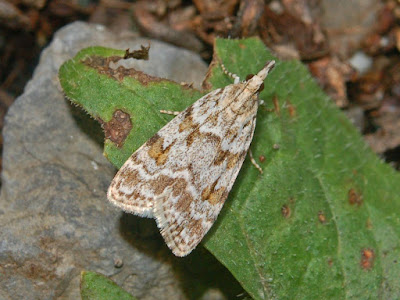
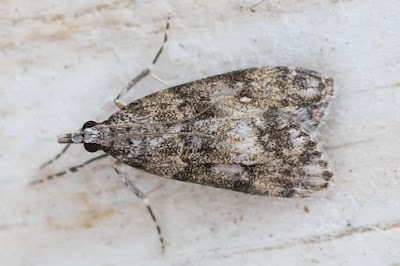
Close to 600 species of Scopariinae are known from around the world with the highest diversity found on tropical mountains and islands (Léger et al. 2019). They are mostly a mottled greyish in coloration, blending in among the rocks and tree trunks on which they settle during the day. Like other pyraloids, they have large palps that extend in front of the head; pyraloids as a whole are sometimes referred to as 'snout moths' in reference to the appearance this gives them. Forewing venation is characterised by clear separation of vein R2 from R3+4 and absence of CuP (Nielsen & Common 1991).

Meadow grey Scoparia pyralella, copyright Hectonichus.


The majority of scopariine species feed as larvae on mosses, living concealed within a slight silk web. A smaller number feed on dicotyledons or lichens. One New Zealand species, the sod webworm Eudonia sabulosella, has been known to cause economic damage to pasture during sporadic outbreaks. Other species generally do not cause significant impact to humans.

Eudonia lacustrata, copyright Tony Morris.


Identification of scopariines is notoriously difficult with many species closely approximating each other in pattern or exhibiting confounding intra-specific variation. The two largest genera Scoparia and Eudonia can only be reliably separated by examination of the genitalia. Two genera, the Indo-Australian Micraglossa and the Neotropical Gibeauxia, are distinguished by the presence of shiny golden scales on head, thorax and abdomen. With such significant challenges to their study, it would not be surprising if 600 species should turn out to be a marked under-estimate of their true diversity.

REFERENCES

Léger, T., B. Landry & M. Nuss. 2019. Phylogeny, character evolution and tribal classification in Crambinae and Scopariinae (Lepidoptera, Crambidae). Systematic Entomology 44: 757–776.

Nielsen, E. S., & I. F. B. Common. 1991. Lepidoptera (moths and butterflies). In: CSIRO. The Insects of Australia: A textbook for students and research workers 2nd ed. vol. 2 pp. 817–915. Melbourne University Press: Carlton (Victoria).

source http://coo.fieldofscience.com/2022/03/a-brief-spotlight-on-scopariines.html

Saturday, 12 March 2022

Psalidothrips

Many of you may know thrips as small insects that infest buds and young shoots of garden plants, stymieing growth and causing malformed development. However, there is also a wide diversity of thrips species that feed on fungi, inhabiting leaf litter and other fallen vegetation. In tropical and subtropical regions of the world, one of the more numerous genera of such fungus-feeders is Psalidothrips.

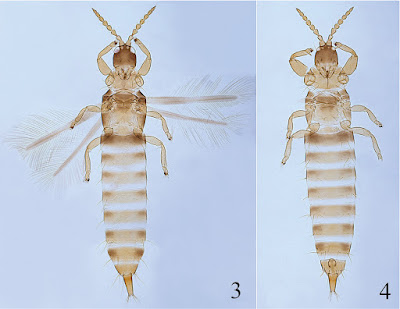
Winged female (left) and wingless male of Psalidothrips comosus, from Zhao et al. (2018).


Close to fifty species of Psalidothrips have been described from various locations around the world (Wang et al. 2019). They are most commonly found among leaf litter and are believed to feed on fungal hyphae. Most Psalidothrips are relatively small, pale thrips, yellowish or light brown in coloration. As members of the family Phlaeothripidae, the last segment of the abdomen is modified into a tube ending in a ring of setae; in Psalidothrips, this tube is commonly short and the terminal setae are often longer than the tube.

As is common among thrips, the recognition of Psalidothrips and its constituent species is often complicated by within-species variation. Many species are known as both winged and wingless forms (Wang et al., 2019, note that Australian species seem particularly prone to winglessness). Wingless forms often show reductions in the sclerotisation of the thorax. It is difficult to name a single feature of the genus that does not find exception in some species or other. Most species are weakly sculpted. For the most part, the maxillary stylets are short and sit low and far apart in the head when retracted. The mouth-cone is similarly short and rounded. The head is often fairly short with rounded cheeks that do not bear strong setae. Setae on the anterior margin of the pronotum are often reduced. The wings, if present, are often more or less constricted at about mid-length. Many phlaeothripids possess a series of large setae on the abdomen that hold the wings in place when folded back; in individuals of Psalidothrips with such setae (obviously, they tend to disappear in wingless individuals), they are often relatively few in number and simply curved.

Many of these features are related to the thrips' litter-dwelling habits. The short mouthparts, for instance, presumably reflect how these thrips are gleaning fungi from the surface of leaves without needing to pierce the leaf's cuticle. As such, it will be interesting to see how the genus holds out as our understanding of thrips phylogeny improves. Is this a true evolutionarily coherent assemblage, or disparate travellers who are following a fashion?

REFERENCE

Wang, J., L. A. Mound & D. J. Tree. 2019. Leaf-litter thrips of the genus Psalidothrips (Thysanoptera, Phlaeothripidae) from Australia, with fifteen new species. Zootaxa 4686 (1): 53–73.

source http://coo.fieldofscience.com/2022/03/psalidothrips.html

In Honour of Amblyseius

At this point in time, the Phytoseiidae are one of the most intensely studied families of mites. They are the only group of mesostigmatan mites to have significantly diversified among the foliar environment (on and around plant leaves) where they are mostly predators on other small invertebrates. The taxonomic history of phytoseiids is storied and complex but one taxon that has been consistently recognised as a major part of the family is the genus Amblyseius.

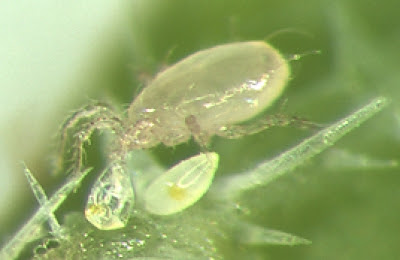
Swirski mite Amblyseius swirskii, from here.


When reviewed by Chant & McMurtry in 2004, Amblyseius was a sizeable assemblage of close to 350 known species (I quite expect that number to have expanded by now). Species of Amblyseius are lightly sclerotised, mostly pale in colour, and usually have a smooth shield covering most of the dorsum. The genus is characterised by the presence of eighteen or nineteen pairs of setae on the dorsum of the idiosoma (the central body) with three sublateral pairs being particularly long: one about the level of the third pair of legs (referred to as the s4 pair) and the other two towards the rear of the body. Except for a few pairs forward of the s4 setae, the remaining dorsal setae are all minute.

The primary focus of human interest in phytoseiids has been their role as predators of crop pests. I described some of the ways in which phytoseiids have been commercially utilised in an earlier post. Species used in this way include several Amblyseius though matters are complicated slightly by changes in taxonomy (for instance, one species which has been widely traded as Amblyseius cucumeris is now placed in the genus Neoseiulus). One of the most widely used of the commercial phytoseiids in recent years has been Amblyseius swirskii, commonly known as the Swirski mite (E. Swirski being an acarologist after whom the species was named). This species was first described in 1962 from almond trees in Israel and subsequently identified from a wide range of plant and crop species. Its history in pest control has been described in detail by Calvo et al. (2015).

The Swirski mite feeds on a range of prey, including mite, thrips and whitefly species, as well as on pollen and micro-fungi. It was first promoted as a commercial control for silverleaf whitefly Bemisia tabaci in the early 2000s. However, it did not get taken up in a big way until media publicity about pesticide residues on capsicum crops in Spain led to a crash in demand. Farmers in that country were forced to look for alternative means of pest control and found great success with A. swirskii (previous attempts to use the cooler-clime preferring Neoseiulus cucumeris in Spain had not been promising). Since then, the Swirski mite has been adopted in numerous countries for use on a range of crops to control various pests such as western flower thrips Frankliniella occidentalis. Because of its ability to grow and thrive on non-insect foods, including artificial diets, this mite is easily cultured commercially. It may also be released on crops before pest infestations develop, building up numbers on a diet of pollen until suitable prey presents itself. For the same reason, Swirski mite populations do not crash before pest control is complete. Overall, a remarkable success and a prime example of the value of Amblyseius species to mankind.

REFERENCES

Calvo, F. J., M. Knapp, Y. M. van Houten, H. Hoogerbrugge & J. E. Belda. 2015. Amblyseius swirskii: what made this predatory mite such a successful biocontrol agent? Experimental and Applied Acarology 65: 419–433.

Chant, D. A., & J. A. McMurtry. 2004. A review of the subfamily Amblyseiinae Muma (Acari: Phytoseiidae): part III. The tribe Amblyseiini Wainstein, subtribe Amblyseiina n. subtribe. International Journal of Acarology 30 (3): 171–228.

source http://coo.fieldofscience.com/2022/03/in-honour-of-amblyseius.html

Sunday, 6 March 2022

By the Light of the Pony

Light-emitting organs have evolved in many different species of marine fish. For the greater part, they are associated with inhabitants of the deep sea, the twilight and midnight zones beyond the reach of celestial light. Light production by species found in shallow waters is much less common. Nevertheless, one particularly notable radiation of near-surface glowers is the ponyfishes of the family Leiognathidae.

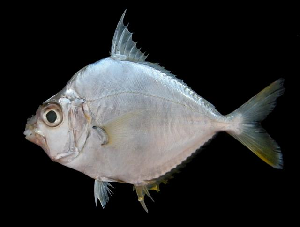
Leiognathus equulus, copyright Sahat Ratmuangkhwang.


Ponyfishes are small, mostly silvery fishes found in coastal and brackish waters in tropical regions of the Indo-West Pacific. The largest ponyfishes grow to about 25 cm in length but most species are much smaller (Woodland et al. 2002). They live in large schools that forage near the surface at night, descending close to the bottom sediment during the day. Why these animals are referred to as 'ponyfishes', I have no idea (perhaps the head is meant to look a bit pony-like?) An alternative vernacular name of 'slipmouth' makes a lot more sense as these fish have highly extensible jaws that can be used to snipe prey out of the water. A groove along the top of the skull allows for reception of a long, mobile premaxilla, supporting the mouth as an elongate tube when extended. Most ponyfishes are planktivores with simple, minute teeth in the jaw and the mouth extending horizontally. Species of the genus Deveximentum have the mouth tilted obliquely at rest so that it stretches upwards when extended. Members of the genus Gazza are piscivores when mature, feeding on other fish, and possess a pair of large caniniform teeth in each of the upper and lower jaws to hold their prey (James 1975).

Ponyishes are also notable for their elaborate light-producing organs. In most bioluminescent fishes, the photophores sit on or close to the skin surface but in leiognathids it is an internal outgrowth of the gut. A cavity around the end of the oesophagus houses colonies of bioluminescent bacteria, usually the species Photobacterium leiognathi. This light organ sits alongside or projects into the gas bladder which has a reflective internal coating. In many species, patches of scale-less, translucent skin allow the transmitted light to shine forth brightly. Muscular 'shutters' associated with the light organ allow the fish to control light transmission more directly (Woodland et al. 2002).

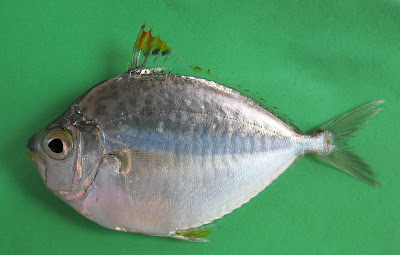
Photopectoralis bindus, copyright D. G. R. Wiadnya.


In a review of ponyfish taxonomy by James (1975), no mention was made of the light-emitting organ or many of its associated structures (though reference was made to the absence of scales on certain parts of the body). With the exceptions of the distinctive genera Gazza and Deveximentum, ponyfishes were assigned to a broad genus Leiognathus. Since then, variations in the structure of the light organ have been recognised as taxonomically significant, allowing the recognition of several genera divided between two subfamilies Leiognathinae and Gazzinae (Chakrabarty et al. 2011). Leiognathinae is defined by plesiomorphic characters and is likely to be paraphyletic to Gazzinae (Sparks & Chakrabarty 2015).

Because of the nocturnal habits of ponyfish and the delicacy of the light-emitting structures, our understanding of how light production functions in Leiognathidae remains somewhat limited. In Leiognathinae and females of Gazzinae, the light organ is relatively small and the external body surface lacks translucent patches. For the most part, light is expressed in these individuals as a uniform ventral glow that probably functions as counter-illumination (the light from the venter prevents the fish from appearing as a silhouette against light from the water surface to predators swimming below). Alternatively, light may be flashed to warn school-mates of danger. In males of Gazzinae, conversely, the light organ is enlarged relative to females and associated with translucent 'windows'. The shape of the organ and the arrangement of the 'windows' is a primary factor in distinguishing genera. Rhythmic flashing of light has been observed in males of many gazzine species and is probably characteristic of the group as a whole. Woodland et al. (2002) observed a school of several hundred Eubleekeria splendens flashing their lights synchronously shortly after nightfall. The exact function of such displays is uncertain, whether in courtship displays, co-ordinating school movements, attracting prey or dissuading predators. The sexually dimorphic nature of the light organ system, together with its species-specific expression, might seem to favour the first of these options but it should be noted that they are not all mutually exclusive.

Despite their small size, ponyfishes are often significant food fish for people living in areas where they are found. Thanks to their schooling behaviour, they are often a major component of dredge catches. In the Philippines, they are used for making bagoong, a fermented fish paste. In other places, they may be cooked whole after cleaning. The glow, sadly, does not survive the process.

REFERENCES

Chakrabarty, P., M. P. Davis, W. L. Smith, R. Berquist, K. M. Gledhill, L. R. Frank & J. S. Sparks. 2011. Evolution of the light organ system in ponyfishes (Teleostei: Leiognathidae). Journal of Morphology 272: 704–721.

James, P. S. B. R. 1975. A systematic review of the fishes of the family Leiognathidae. J. Mar. Biol. Ass. India 17 (1): 138–172.

Sparks, J. S., & P. Chakrabarty. 2015. Description of a new genus of ponyfishes (Teleostei: Leiognathidae), with a review of the current generic-level composition of the family. Zootaxa 3947 (2): 181–190.

Woodland, D. J., A. S. Cabanban, V. M. Taylor & R. J. Taylor. 2002. A synchronized rhythmic flashing light display by schooling Leiognathus splendens (Leiognathidae: Perciformes). Marine and Freshwater Research 53: 159–162.

source http://coo.fieldofscience.com/2022/03/by-light-of-pony.html

Friday, 18 February 2022

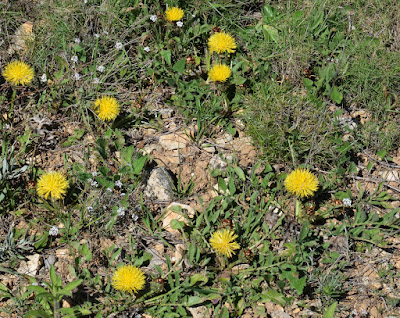
Centaurea acaulis, Stemless Star-thistle

In an earlier post, I commented on the diversity of species of the star-thistle genus Centaurea. Among the many, many species that have been assigned to this genus is the stemless star-thistle Centaurea acaulis* of northern Africa.

*Though dissolution of the polyphyletic Centaurea may lead to this species changing places. Banfi et al. (2005) listed it under the name of Colymbada acaulis.

Patch of stemless star-thistles Centaurea acaulis, from L'herbiel de Gabriel.


Centaurea acaulis is an inhabitant of dry, rocky habitats that is native to Tunisia and northeastern Algeria. As indicated by both the vernacular and botanical names, its growth habit lacks a central stem. Instead, the long, lobed leaves (which can be up to about a foot in length going by photos provided by Agut Escrig et al., 2021) lie prostrate on the ground. These leaves end in a large, ovate apical section with lobes running down the side of the central rib, becoming smaller towards the base. Flower heads are solitary and carry a mass of bright yellow florets. The involucral bracts (the 'scales' around the outside of the base of the flower head) are flat and green with darker longitudinal veins. The distal section of the bracts is triangular with a membranous, ciliate margin and typically (though not always) ends in a long spine. A closely related species found in northwestern Algeria and Morocco, C. oranensis, has historically been treated as a subspecies of C. acaulis (under the name C. acaulis ssp. boissieri, because botanical nomenclature is weird). However, C. oranensis was raised to species level by Greuter & Aghababian (in Greuter & von Raab-Straube, 2005) on the basis of its distinct involucral bracts, which are distally blackish, ovate and concave, with a margin of dense, long, stiff setae.

Recent years have seen this species extending its range northwards with populations now found in Spain, Italy and Malta. In Malta, it was initially found grown in a disturbed area with particularly alkaline soil (Buttigieg & Lanfranco 2001). The mechanism of its arrival is uncertain. It could have dispersed naturally across the Mediterranean, or it may have arrived mixed into bird seed. However it got there, one might expect that as the south of Europe becomes increasingly hotter and drier, the stemless star-thistle will continue to spread.

REFERENCES

Agut Escrig, A., J. P. Solís Parejo & P. Urrutia Uriarte. 2021. Noticias sobre la presencia de Centaurea acaulis L. (Asteraceae) en la Península Ibérica. Flora Montiberica 81: 51–54.

Banfi, E., G. Galasso & A. Soldano. 2005. Notes on systematics and taxonomy for the Italian vascular flora. 1. Atti Soc. It. Sci. Nat. Museo Civ. Stor. Nat. Milano 146 (2): 219–244.

Buttigieg, R., & E. Lanfranco. 2001. New records for the Maltese flora: Centaurea acaulis L. (family: Asteraceae). Central Mediterranean Naturalist 3 (3): 147–148.

Greuter, W., & E. von Raab-Straube (eds) 2005. Euro+Med notulae, 1. Willdenowia 35: 223–239.

source http://coo.fieldofscience.com/2022/02/centaurea-acaulis-stemless-star-thistle.html

Sunday, 13 February 2022

Lifestyles of the Rosalinidae

Among the modern foraminiferans, one of the most prominent radiations is among members of the Rotaliida, characterised by globose chambers and calcareous, hyaline test walls. Among the numerous families making up the Rotaliida are members of the Rosalinidae.

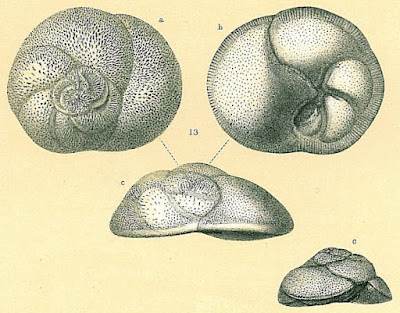
Benthic form of Rosalina globularis, from Brady (1884).


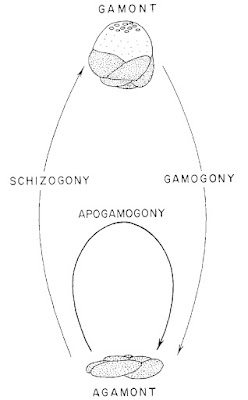
Rosalinids may be regarded as fairly typical-looking marine rotaliids with the test growing freely as a low trochospire (so a flattened cone or dish shape). The aperture of the test is a low slit on the interior margin along the umbilicus (Hansen & Revets 1992). Rosalinids have a complex life cycle involving both benthic and planktonic stages (Sliter 1965). The asexually reproducing diploid stage is benthic. Depending on conditions, diploid individuals may divide to produce other diploid individuals, resulting in several asexual generations. Eventually, however, the diploid generation will undergo meiosis to produce the haploid sexual generation (in the common species Rosalina globularis, this is induced by exposure to warmer water). In the sexual generation, a large globular chamber forms at maturity that covers the umbilical side of the test. This float chamber becomes filled with gas, allowing the foram to disperse planktonically before releasing gametes to produce the next diploid generation. Planktonic individuals are distinct enough in appearance from their benthic counterparts that they were long mistaken for distinct taxa before their identity was revealed by lab cultures.

Life cycle of Rosalina globularis, from Sliter (1965).


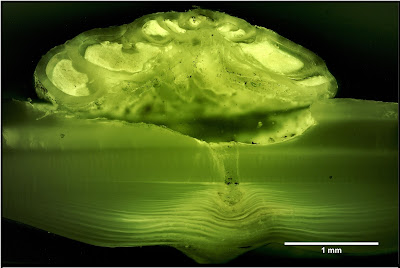
The majority of forams are particulate feeders. A network of filamentous pseudopodia radiating outwards from the cell body captures micro-organisms and other organic particles. However, one genus of rosalinids, Hyrrokkin, lives as parasites on sessile invertebrates (Cedhagen 1994). Species of this genus have variously been found on sponges, corals and bivalves. On sponges, they settle on the inhalent surface of the sponge and dissolve the underlying tissues. On bivalves, they form pits on the shell surface from which they bore holes through to the body cavity. Pseudopodia extended through this hole allow the foram to feed on host tissue. Infested hosts may bear multiple scars from the foram moving about on the outer surface. The forams may also feed on other animals such as polychaete worms or bryozoans attached to the surface of their primary host. In such cases, Hyrrokkin remains in its original pit but develops an irregularly shaped chamber with its aperture directed towards the alternate prey. Hyrrokkin species evidently do well from their rapacious lifestyle: whereas other rosalinids are only a fraction of a millimetre in diameter, Hyrrokkin sarcophaga is an absolute giant reaching around six millimetres across and with protoplasm containing thousands of nuclei. Proving once again that one may make a great deal of profit from the labour of others.

Cross-section of Hyrrokkin sarcophaga boring into shell of file clam Acesta excavata, from Schleinkofer et al. (2021).


REFERENCES

Cedhagen, T. 1994. Taxonomy and biology of Hyrrokkin sarcophaga gen. et sp. n., a parasitic foraminiferan (Rosalinidae). Sarsia 79: 65–82.

Hansen, H. J., & S. A. Revets. 1992. A revision and reclassification of the Discorbidae, Rosalinidae, and Rotaliidae. Journal of Foraminiferal Research 22 (2): 166–180.

Sliter, W. V. 1965. Laboratory experiments on the life cycle and ecologic controls of Rosalina globularis d'Orbigny. Journal of Protozoology 12 (2): 210–215.

source http://coo.fieldofscience.com/2022/02/lifestyles-of-rosalinidae.html